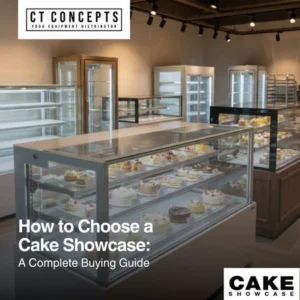
How to Choose a Cake Showcase: A Complete Buying Guide
Walk into any successful bakery or cake shop and one piece of equipment almost always does the heavy lifting for sales: the cake showcase. It’s the first thing customers see, the silent salesperson that turns a passing glance into a purchase, and — if chosen poorly — a daily source of spoiled stock and frustrated staff. Picking the right cake showcase isn’t just about looks. It’s a decision that affects food safety, energy costs, product life, and your bottom line for years to come.
This guide breaks down exactly what to look for before you buy.
What Is a Cake Showcase?
A cake showcase (also called a cake display case, bakery display cooler, or pastry showcase) is a refrigerated or ambient display unit designed to store and present cakes, pastries, and desserts in a way that’s both hygienic and visually appealing. Unlike standard refrigerators, showcases are built with clear glass panels, controlled lighting, and precise temperature zones so products stay fresh while remaining fully visible to customers. Know more about cake showcase in “What is a Cake Showcase”.
Why the Right Showcase Matters
Before getting into specs, it helps to understand what’s at stake:
- Product freshness: Cream and dairy-based cakes spoil quickly outside the correct temperature range.
- Visual merchandising: Studies in retail food service consistently show that visible, well-lit displays increase impulse purchases.
- Energy costs: A poorly insulated or oversized unit can quietly inflate your electricity bill month after month.
- Compliance: Food safety regulations in most regions require specific holding temperatures for perishable bakery items.
Getting this one purchase right pays dividends across your entire operation.
Key Factors to Consider When Choosing a Cake Showcase
1. Refrigeration Type: Static vs. Fan-Forced
- Static cooling relies on natural air convection. It’s quieter and cheaper but can create uneven temperatures, leading to soft spots that shorten shelf life.
- Fan-forced (dynamic) cooling circulates cold air evenly throughout the cabinet, keeping temperatures consistent from top to bottom. This is generally the better choice for cream cakes, mousse cakes, and anything highly perishable.
If your product range includes dairy-heavy items, prioritize fan-forced models.
2. Size and Capacity
Measure your available floor space first, then think in terms of shelving, not just footprint. Consider:
- Number of shelves (adjustable shelving offers more flexibility as your product range changes)
- Depth of the case (deeper cases hold more but can make items at the back harder to reach and see)
- Curved vs. straight glass — curved fronts show more surface area of each cake but take up more floor space
A good rule of thumb: buy for your peak-season volume, not your average day, but avoid oversizing so much that the compressor works harder than necessary to cool empty space.
3. Temperature Range
Different products need different holding temperatures:
- Chilled cakes and pastries: typically 2–8°C (36–46°F)
- Frozen desserts or ice cream cakes: -18°C (0°F) or lower
- Ambient display (dry cakes, cookies): no refrigeration needed
Check that the unit’s stated range comfortably covers your product line — with a buffer, since real-world performance often runs slightly warmer than lab specs, especially in hot climates or busy kitchens with frequent door openings.
4. Glass Configuration and Visibility
The whole point of a showcase is visibility, so glass quality matters:
- Straight glass: sleek, space-efficient, great for modern bakery aesthetics
- Curved glass: maximizes visible surface area and gives a more premium, boutique feel
- Double or triple-pane glass: better insulation, less condensation, lower energy use
Also check for anti-fog and low-emissivity (low-E) glass coatings, which prevent moisture buildup that can obscure your display, especially in humid environments.
5. Lighting
LED lighting has largely replaced fluorescent in modern showcases for good reason:
- Produces less heat (which means less strain on the cooling system)
- More energy-efficient
- Better color rendering, so cakes look as appetizing as they actually are
Look for adjustable or dimmable LED strips positioned to avoid glare while still highlighting texture and color.
6. Build Material and Durability
Stainless steel interiors are the industry standard because they’re easy to sanitize, resist corrosion, and hold up under daily commercial use. Cheaper units with painted or plastic interiors may look fine initially but degrade faster and can be harder to keep compliant with food safety standards.
7. Noise Level
If your showcase sits in a customer-facing area — a café counter, a retail front — compressor noise matters more than it does in a back-of-house freezer. Look for models with insulated compressor compartments or remote condensing units if noise is a concern.
8. Energy Efficiency
Commercial refrigeration runs 24/7, so efficiency compounds fast. Check for:
- Energy Star or equivalent certification
- Auto-defrost cycles that don’t spike energy use
- Variable-speed compressors, which adjust output based on demand rather than running at full power constantly
A slightly higher upfront cost for an efficient unit often pays for itself within a couple of years.
9. Maintenance and Cleaning Access
A showcase that’s hard to clean becomes a hygiene liability. Prioritize models with:
- Removable shelves and trays
- Easily accessible drainage systems
- Sliding or hinged rear doors for staff restocking without disrupting the front display
10. Warranty and After-Sales Support
Commercial refrigeration is a long-term investment, and compressors do eventually fail. Look for:
- A minimum 1–2 year warranty on parts and labor
- Availability of local service technicians
- Easy access to replacement parts (avoid obscure or discontinued models)
Common Mistakes to Avoid
- Buying based on price alone — a cheap unit with poor insulation often costs more in energy and spoiled product over time.
- Ignoring ambient kitchen temperature — a showcase near ovens or in a hot climate needs a wider cooling margin than the spec sheet’s “ideal lab conditions.”
- Overlooking shelf flexibility — fixed shelving limits your ability to display taller cakes or restyle displays seasonally.
- Skipping a site measurement — always measure doorways and floor space before ordering; returns on large refrigeration units are costly and logistically painful.
Quick Buying Checklist
- Confirms product-appropriate temperature range
- Fan-forced cooling for perishable/dairy items
- Adequate shelving and adjustable configuration
- LED lighting, ideally dimmable
- Stainless steel interior
- Energy certification or efficient compressor
- Easy-clean, easy-access design
- Manageable noise level for the space
- Solid warranty with local support
Final Thoughts
A cake showcase is more than a display fridge — it’s a merchandising tool, a food safety system, and a long-term operating cost all in one. Taking the time to match the right refrigeration type, size, glass configuration, and energy profile to your specific product line will save money, reduce waste, and keep your cakes looking as good as they taste, display after display, day after day.