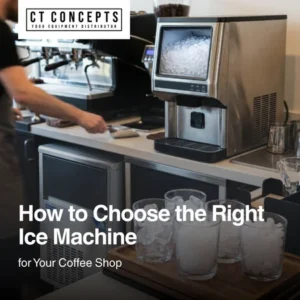
How to Choose the Right Ice Machine for Your Coffee Shop
A successful coffee shop depends on more than quality coffee beans and excellent customer service. Behind every iced latte, cold brew, frappe, and refreshing beverage is a reliable ice machine for coffee shops that keeps drinks consistent and customers satisfied.
Selecting the right commercial ice machine for a coffee shop is an important decision because ice directly affects beverage quality, preparation speed, and daily operations. The wrong machine can create problems such as ice shortages, slow service, higher operating expenses, and inconsistent drink results.
This guide explains how to choose the right ice maker for your cafe by covering ice capacity, ice types, machine sizes, energy efficiency, maintenance, and other important factors.
Why Coffee Shops Need a Reliable Ice Machine
Modern coffee shops serve a large number of cold beverages every day. Iced coffee, iced americanos, cold brew, milk tea, smoothies, and blended drinks all depend on a steady supply of clean and consistent ice.
With the right commercial ice maker, coffee shop owners can:
- Improve drink preparation speed
- Serve more customers during peak hours
- Maintain beverage consistency
- Reduce dependence on purchased bagged ice
- Improve employee workflow
- Control long-term operating costs
In addition, running out of ice during busy periods can affect customer satisfaction and reduce sales opportunities.
Step 1: Calculate Your Coffee Shop’s Ice Demand
Before purchasing an ice machine, determine how much ice your business uses every day. Commercial ice makers are usually measured by how many pounds of ice they produce within 24 hours.
For small cafes, a compact machine may provide enough production for regular customer traffic. However, busy locations require higher-capacity equipment to prevent shortages.
Typical ice production needs include:
Small Coffee Shops
Ideal for:
- Small cafes
- New beverage businesses
- Low-volume locations
Recommended capacity:
- 50–200 lbs of ice per day
Medium Coffee Shops
Suitable for:
- Growing cafes
- Restaurants with coffee service
- Beverage-focused businesses
Recommended capacity:
- 200–500 lbs of ice per day
Large Coffee Shops
Best for:
- High-traffic cafes
- Multiple beverage stations
- Franchise locations
Recommended capacity:
- 500+ lbs of ice per day
Choosing the correct capacity helps prevent unnecessary expenses while ensuring enough ice is available throughout the day.
Step 2: Select the Best Ice Type for Your Menu
Different drinks require different ice styles. Therefore, choosing the right ice type depends on what beverages your coffee shop offers.
Cube Ice
Cube ice is one of the most popular options for cafes and restaurants.
It provides several advantages:
- Melts slower compared to smaller ice pieces
- Keeps beverages cold longer
- Creates a clean presentation
- Works well with iced coffee drinks
For example, iced lattes, cold brew, and soft drinks commonly use cube ice because it provides reliable cooling performance.
Nugget Ice
Nugget ice has become popular because of its soft and chewable texture.
It is commonly used for:
- Specialty drinks
- Premium beverages
- Smoothies
- Refreshing summer drinks
Additionally, nugget ice can create a unique customer experience because many customers enjoy its texture.
Flake Ice
Flake ice produces thin pieces that cool drinks quickly.
This type is commonly used for:
- Smoothies
- Blended beverages
- Food displays
However, most coffee shops focused mainly on iced coffee usually prefer cube ice because it provides better drink presentation and longer cooling.
Step 3: Consider Machine Size and Installation Space
Available space is another important factor when choosing an ice maker.
Coffee shops usually choose between two main types:
Undercounter Ice Machines
These machines fit beneath counters and are designed for smaller spaces.
Benefits include:
- Space-saving design
- Easy access for employees
- Simple installation
They are a practical choice for small cafes with limited kitchen or counter space.
Modular Ice Machines
Modular machines sit on top of separate ice storage bins.
They are designed for:
- High-volume production
- Larger beverage operations
- Growing businesses
Furthermore, modular systems allow businesses to increase storage capacity as demand grows.
Step 4: Choose the Correct Storage Capacity
Ice production is only one part of the equation. Storage capacity also matters because your team needs immediate access to ready-to-use ice.
For instance, a machine producing hundreds of pounds of ice daily may still struggle during rush hours if the storage bin is too small.
Consider:
- Daily beverage sales
- Peak operating hours
- Number of employees
- Customer demand patterns
A properly sized storage bin helps maintain a smooth workflow and prevents delays.
Step 5: Look for Energy Efficiency
Since ice machines operate every day, energy consumption can affect your operating expenses.
Energy-efficient machines help reduce:
- Electricity costs
- Water usage
- Maintenance expenses
When comparing machines, check for:
- Efficient cooling systems
- Water-saving features
- Quality compressors
- Reliable construction
Although an affordable machine may look attractive initially, a more efficient model can provide better value over time.
Step 6: Understand Cooling Systems
Commercial ice machines usually use air-cooled or water-cooled systems.
Air-Cooled Ice Machines
Air-cooled models use air circulation to remove heat.
They are popular because:
- They consume less water
- Installation is simpler
- They work well for most cafes
For many coffee shops, air-cooled machines provide a practical balance between performance and operating cost.
Water-Cooled Ice Machines
Water-cooled models use water to remove heat from the system.
They can operate quietly and perform well in certain environments. However, they may require more water usage and specific installation requirements.
Step 7: Consider Maintenance and Cleaning
A commercial ice machine requires regular care to produce safe and high-quality ice.
Proper maintenance includes:
- Cleaning ice-making components
- Sanitizing storage bins
- Changing filters
- Checking water quality
- Removing mineral buildup
Without regular cleaning, ice quality may decrease and machine performance can suffer.
As a result, choosing an easy-to-maintain ice maker can reduce repair costs and extend equipment lifespan.
Step 8: Choose a Reliable Commercial Ice Machine Brand
Brand reputation matters because coffee shops rely on their equipment every day.
Popular commercial ice machine brands include:
When comparing brands, look at:
- Warranty coverage
- Availability of parts
- Local technician support
- Machine durability
A dependable ice machine reduces downtime and helps maintain consistent operations.
Common Mistakes When Buying an Ice Machine
Many businesses make mistakes when purchasing ice equipment.
Avoid choosing a machine based only on the lowest price. A cheaper model may not handle your daily demand or future growth.
Also, do not ignore maintenance requirements. A machine that is difficult to clean may become expensive over time.
Finally, always consider your beverage menu before selecting an ice type because different drinks require different ice characteristics.
Final Thoughts: Choosing the Best Ice Machine for Your Coffee Shop
The best ice machine for a coffee shop depends on your daily ice requirements, available space, beverage menu, and future growth plans. Choosing the right and best ice maker supplier might be a obstacle in your business journey, CT Concepts Enterprise provides best and durable commercial ice maker machine that your business needs.
Ultimately, investing in the right commercial ice maker improves service speed, beverage consistency, and customer experience. With proper sizing, regular maintenance, and the correct ice type, your coffee shop can operate efficiently while meeting customer demand.
A high-quality ice machine is not just equipment — it is an important part of delivering great beverages every day.